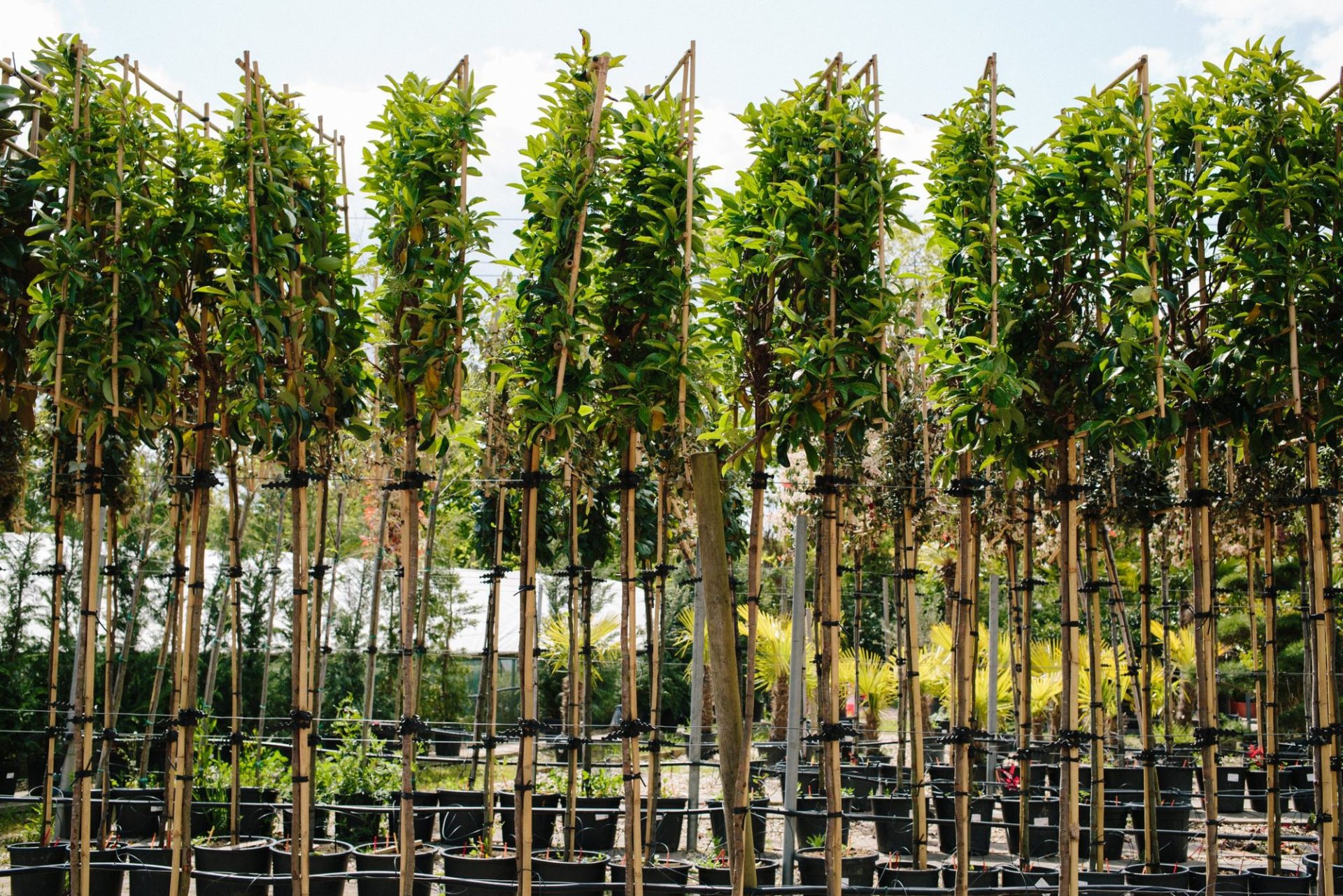
Varieties
Enquire about these trees for prices and availability.Evergreen
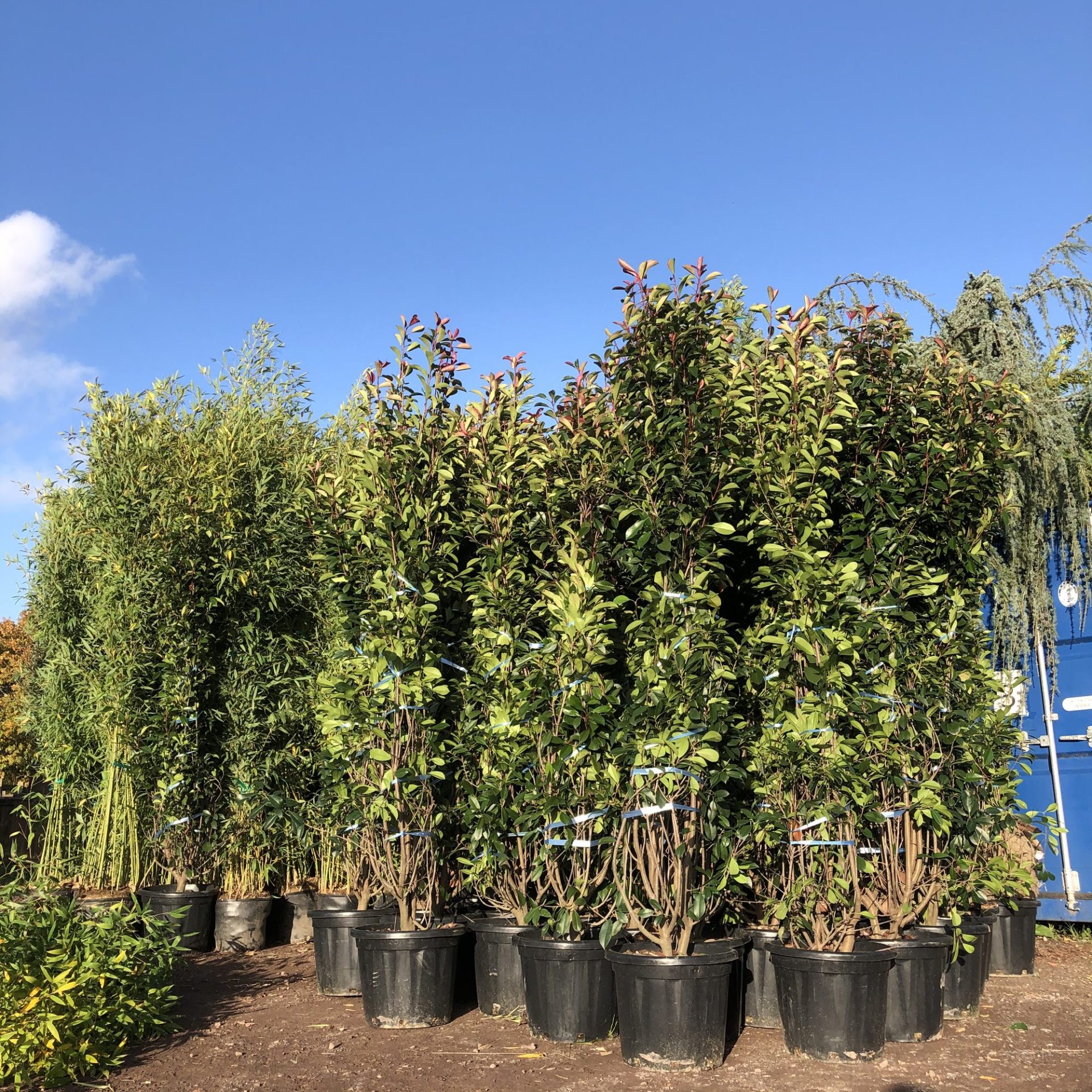
- Photinia × fraseri ‘Red Robin’Enquire
- Prunus laurocerasus ‘Novita’Enquire
- Prunus lusitanica ‘Angustifolia’Enquire
- Prunus lusitanica ‘Brenelia’Enquire
- Ilex ‘Nellie R. Stevens’Enquire
- Elaeagnus × ebbingeiEnquire
Deciduous
- Carpinus betulus · HornbeamEnquire
- Fagus sylvatica · BeechEnquire
- Liquidambar styraciflua ‘Worplesdon’Enquire
Other varieties can be sourced. Send us your requirements.
From the nursery
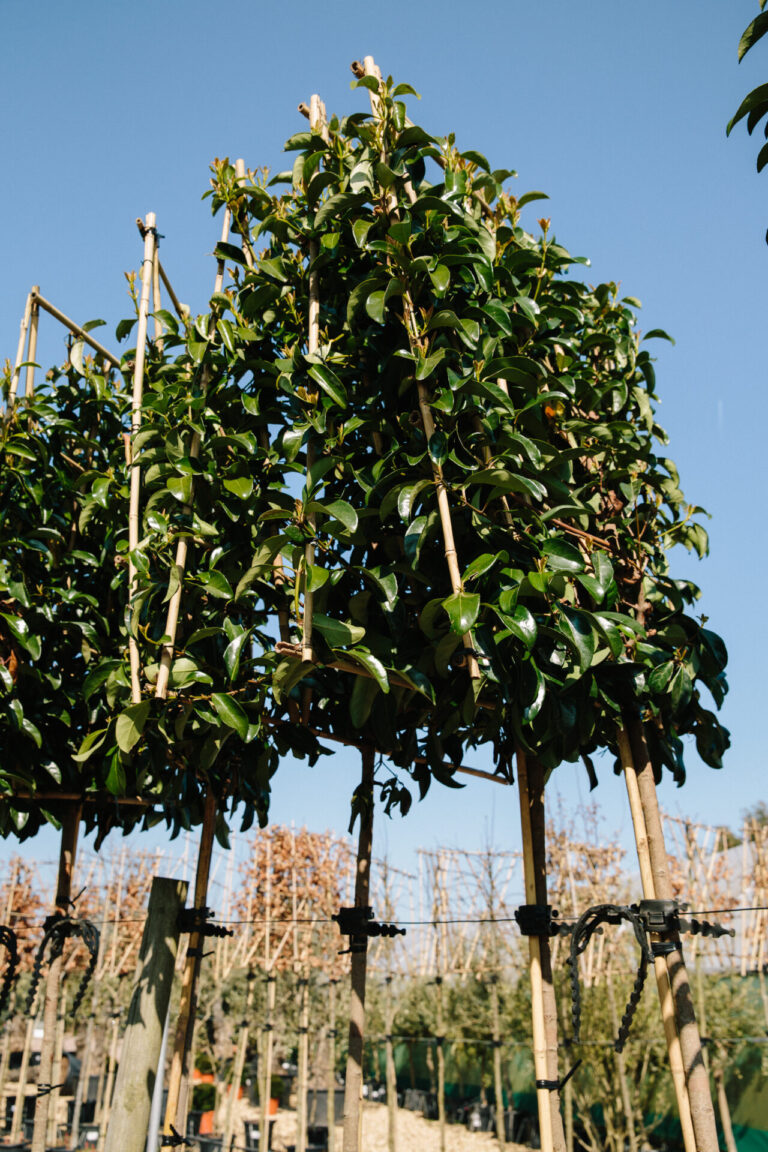
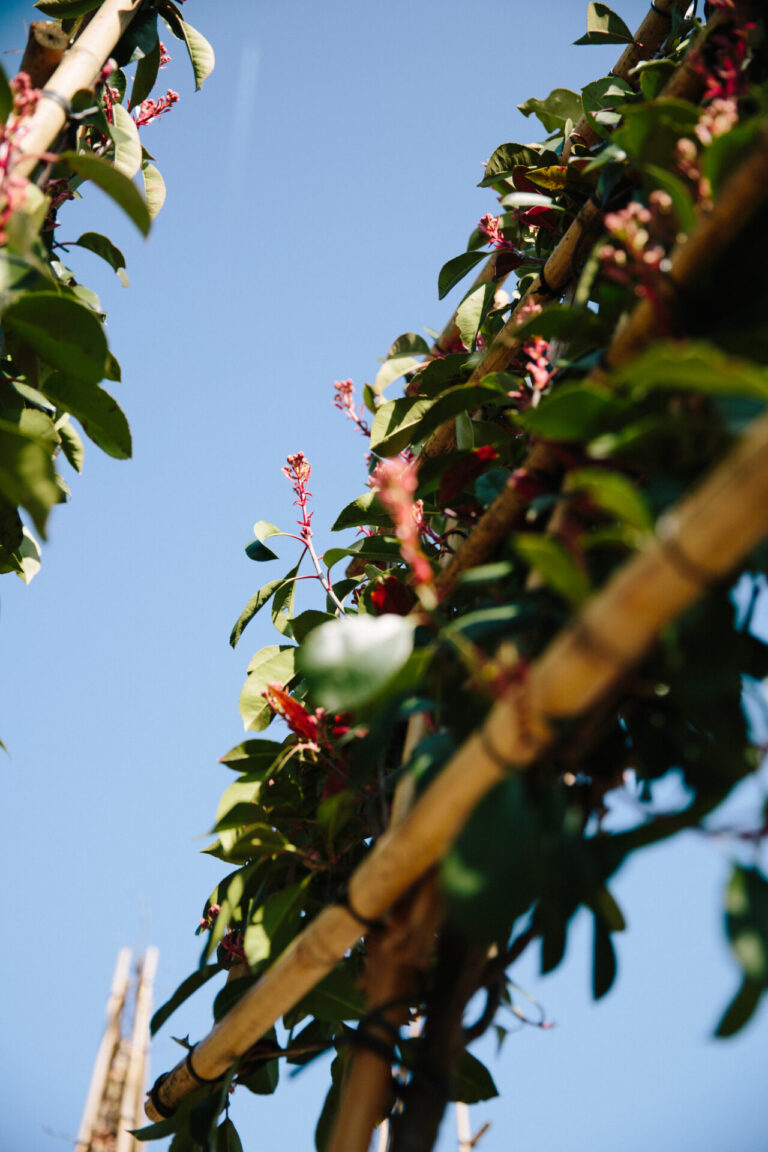
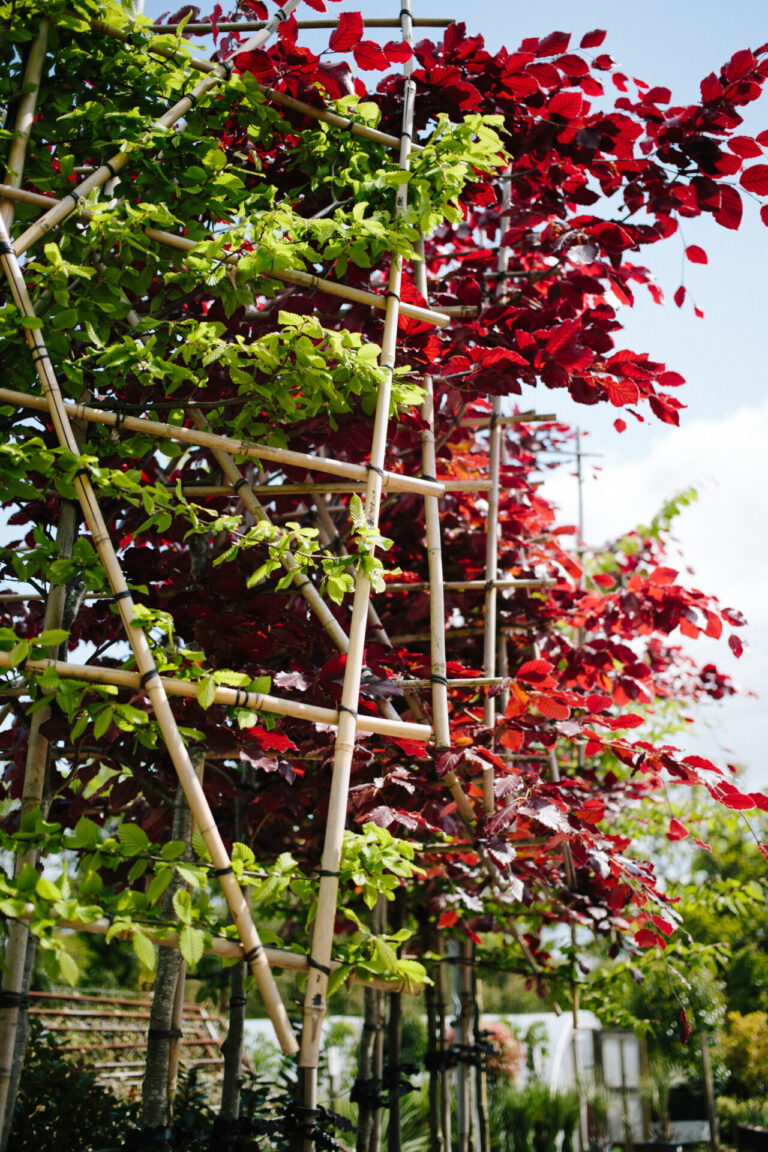
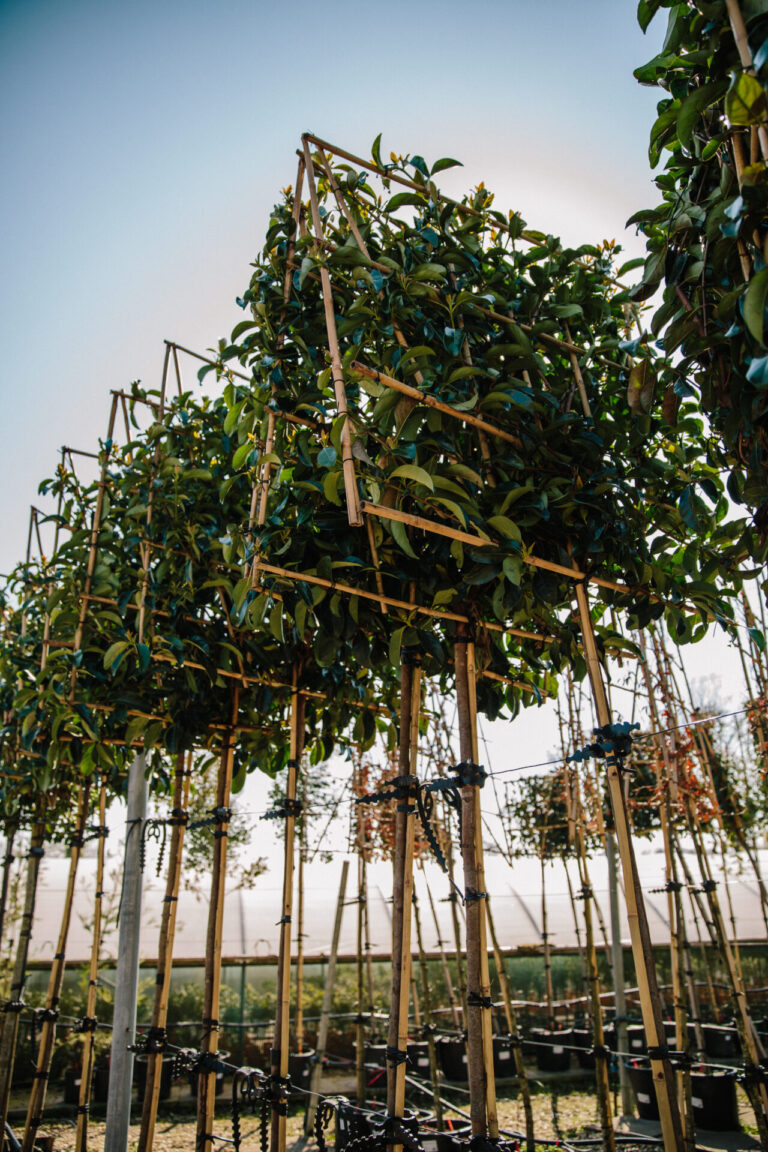
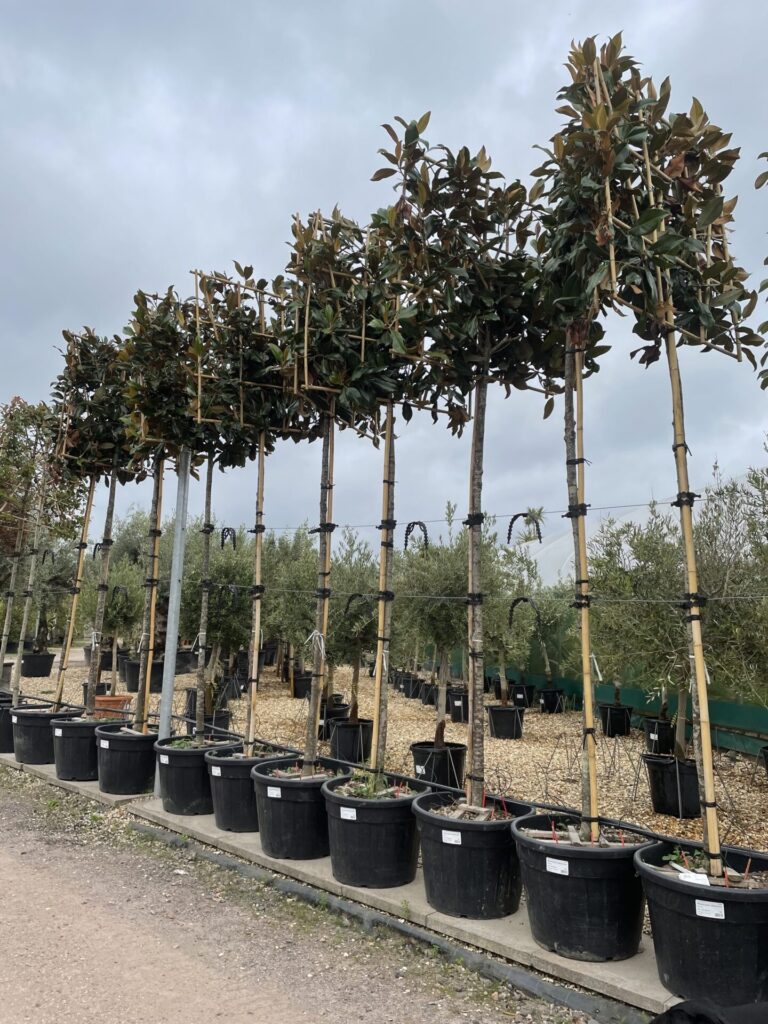
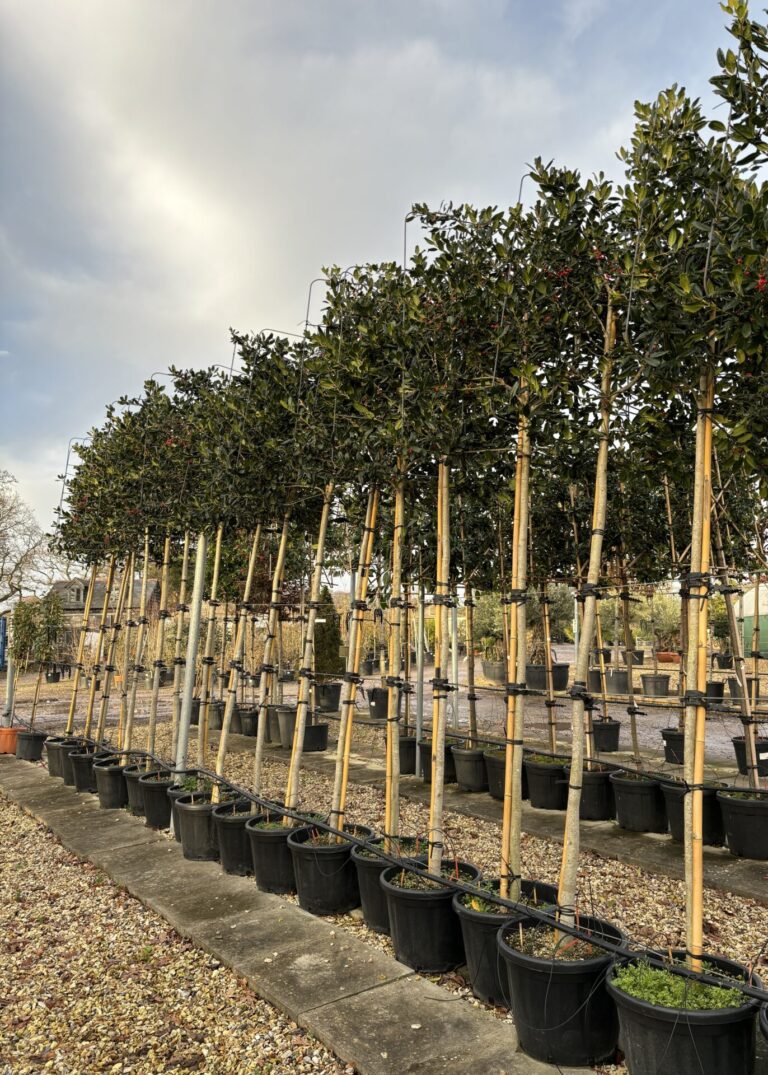
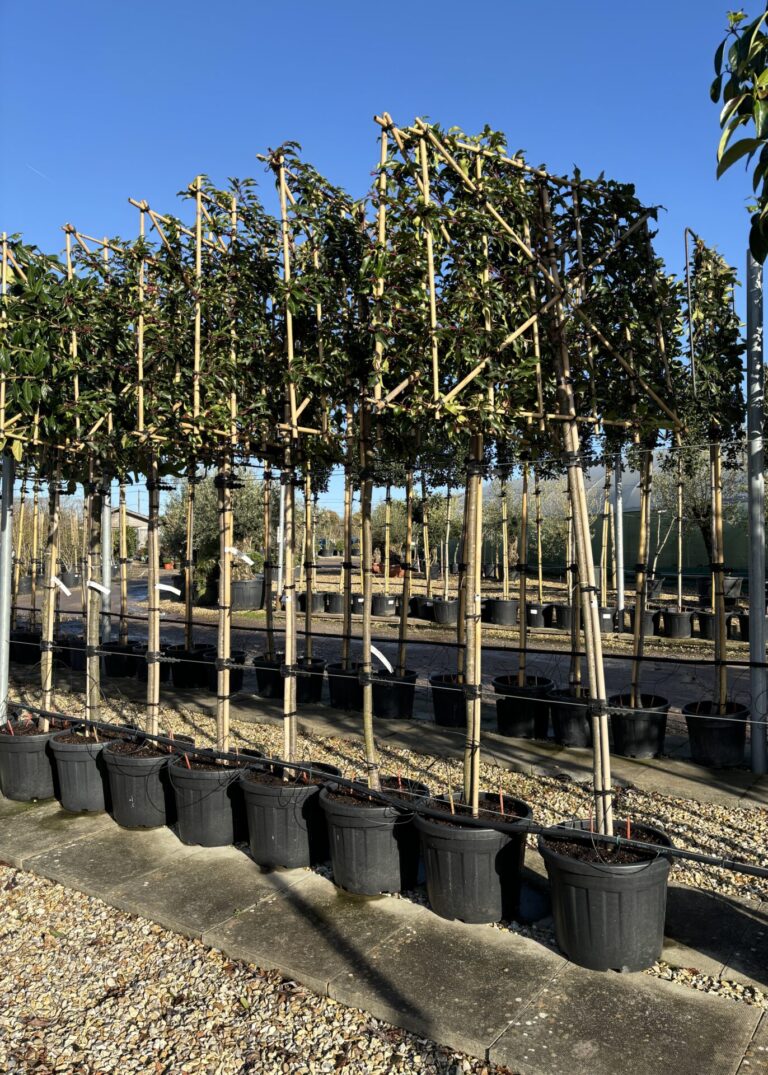
About pleached trees
Evergreen or deciduous
Photinia, laurel and holly screen all year. Hornbeam and beech are deciduous but hold their dry leaves through most of the winter.
Sizes
Girth is measured one metre above the ground. Frame is the trained head, width by height. Trees are usually planted with frames edge to edge, so a 150cm frame means one tree per 1.5 metres.
Planting and care
Stake each tree with two posts and a rail until established. Water well through the first two summers and trim once or twice a year.
More about pleached trees
Read more
Pleached trees are a refined way to introduce structure, height, and privacy into a garden or landscape. With their branches expertly trained along a horizontal framework, they provide an elegant and formal solution for screening, boundary definition, or creating a green architectural feature.
At Folium and Flos, we supply a carefully selected range of pleached trees, ideal for both contemporary and traditional planting schemes. Whether you’re looking to create a smart boundary, soften a wall, or add vertical interest, pleached trees offer both function and timeless appeal.
To view our full range or discuss the best options for your project, contact us or come and visit the nursery.
Questions
Which pleached trees stay green all year?
For year-round screening, choose an evergreen: Photinia 'Red Robin', Portuguese Laurel, Cherry Laurel, Ilex 'Nellie Stevens' or Elaeagnus. Beech holds its dry, coppery leaves through most of the winter, so it still gives good cover.
How far apart should pleached trees be planted?
Space the trunks one frame-width apart so the frames meet and form a continuous screen. To work out how many you need, divide the length of the boundary by the frame width. A 9-metre boundary takes six trees with 150cm frames.
Are pleached trees good for privacy?
Yes. The screen starts on a clear stem, usually above fence height, so they block views from upstairs windows and neighbouring gardens while leaving room for planting underneath. They take up far less ground than a hedge of the same height.
When is the best time to plant pleached trees?
Autumn to early spring is ideal. Container-grown pleached trees can be planted at any time of year as long as they're watered well through dry spells.
How do you look after pleached trees?
Water regularly for the first two summers. Trim once or twice a year, usually in late summer, and tie new shoots in to the frame to keep the panel flat and dense.
Can pleached trees be grown in planters?
Yes, in large, heavy planters with good drainage. They dry out faster than trees in the ground, so plan for regular watering or an irrigation line, especially in summer.
Can I see the trees before ordering?
Yes. Visit the nursery in Sway, Monday to Saturday, with no appointment needed, and we'll help you choose.
Enquire about these trees
Tell us the variety, quantity and delivery postcode, and we'll come back with prices and availability.