
Varieties
Enquire about these plants for prices and availability.Root ball hedging plants
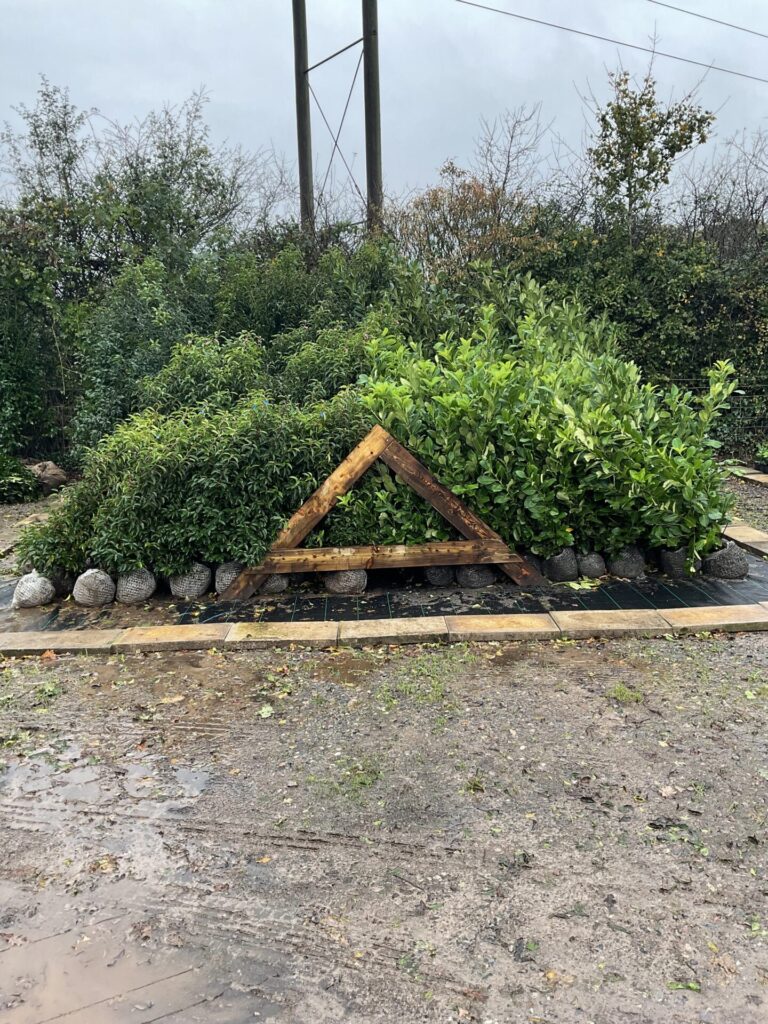
- Prunus laurocerasus (Cherry Laurel)Enquire
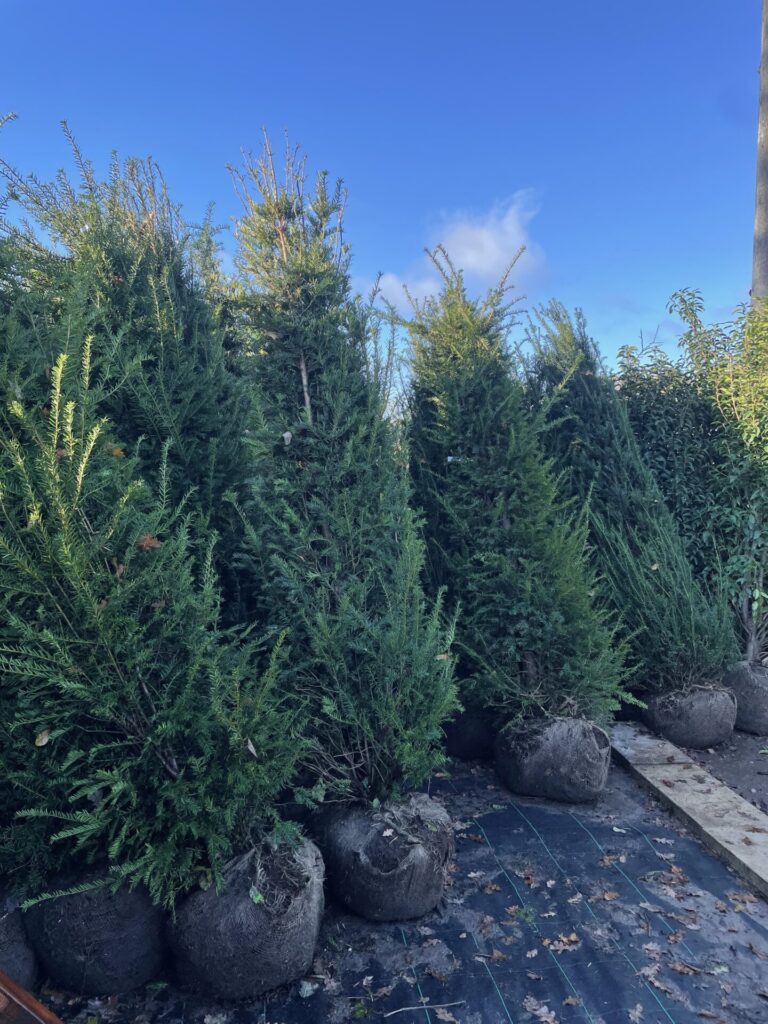
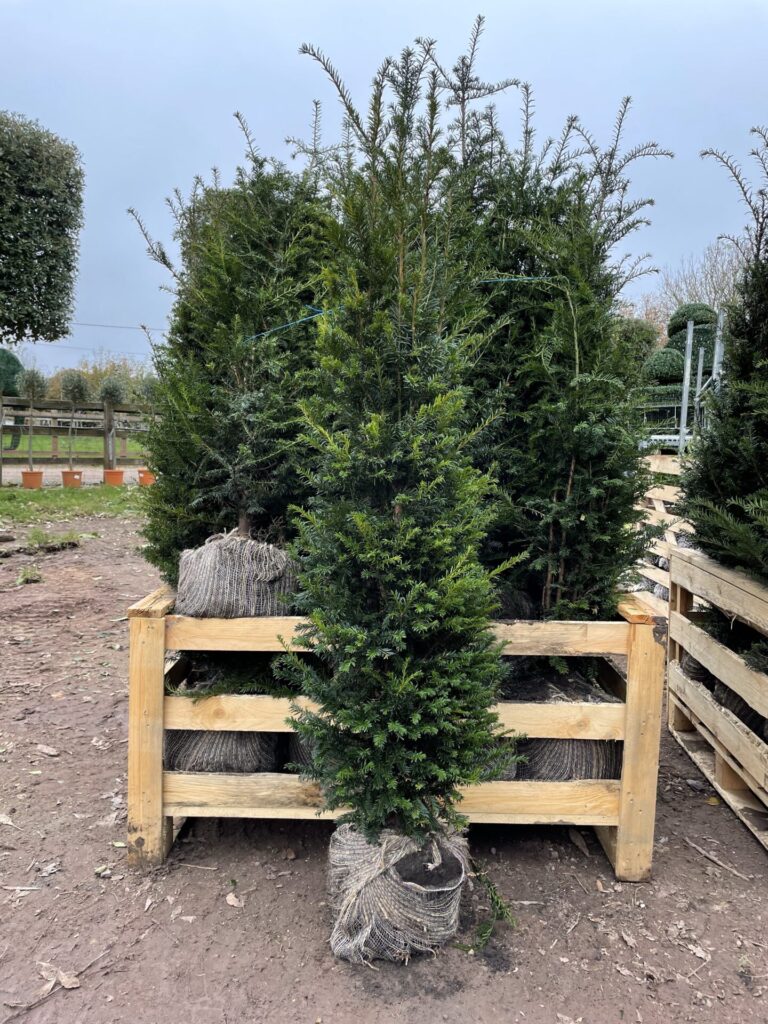
- Taxus baccata (English Yew)Enquire
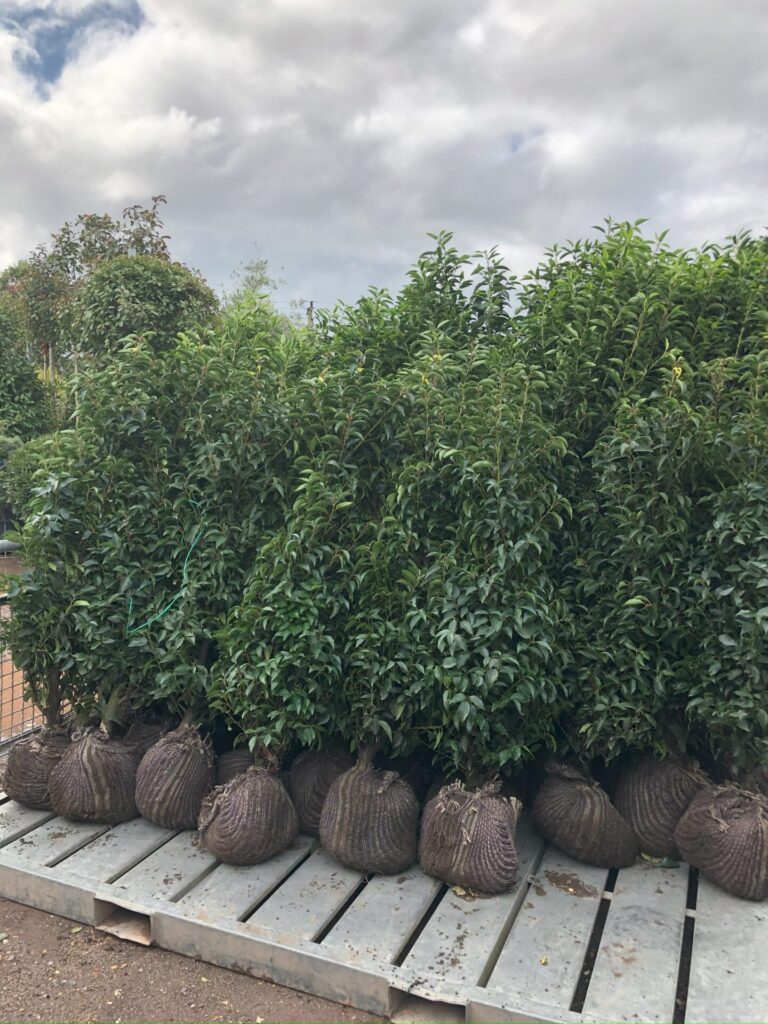
- Prunus lusitanica (Portuguese Laurel)Enquire
- Thuja plicata ‘Martin’Enquire
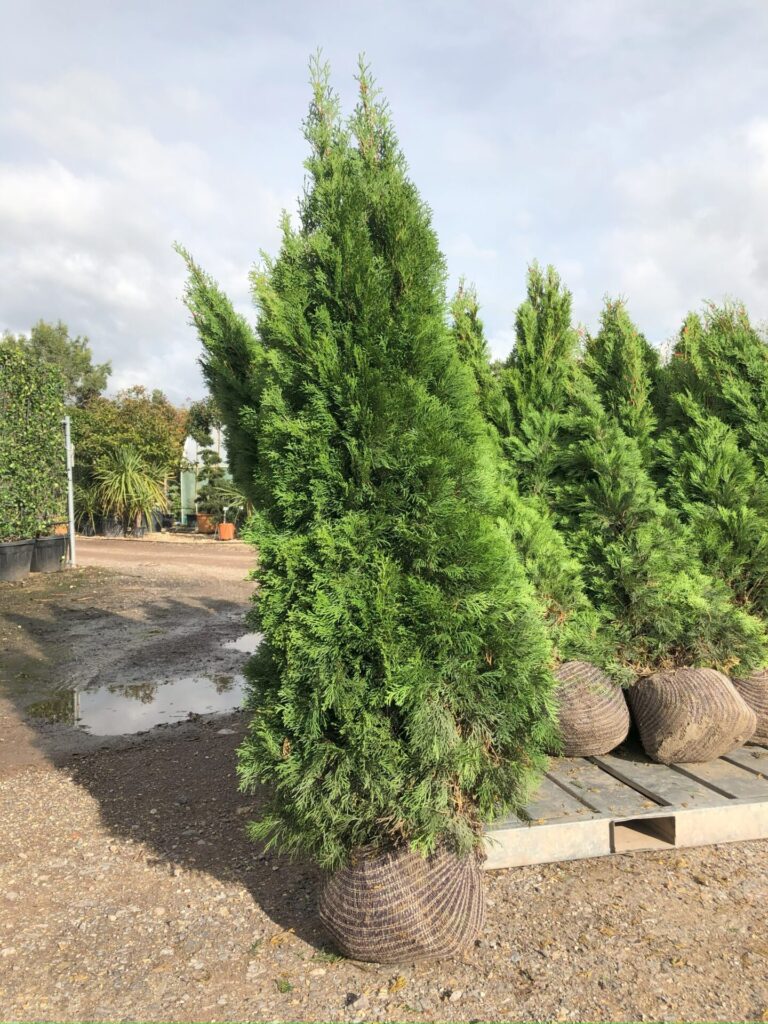
- Thuja occidentalis ‘Smaragd’Enquire
Other varieties can be sourced. Send us your requirements.
From the nursery
More about root-ball hedging
Read more
The root ball season generally runs from November through to March, while plants are dormant and best suited for transplanting. During this period, we supply a carefully selected range of species chosen for their resilience and performance in UK gardens.
If you’re looking for a specific species not listed, we’re happy to source it for you.
Some of our most popular root ball hedging plants:
-
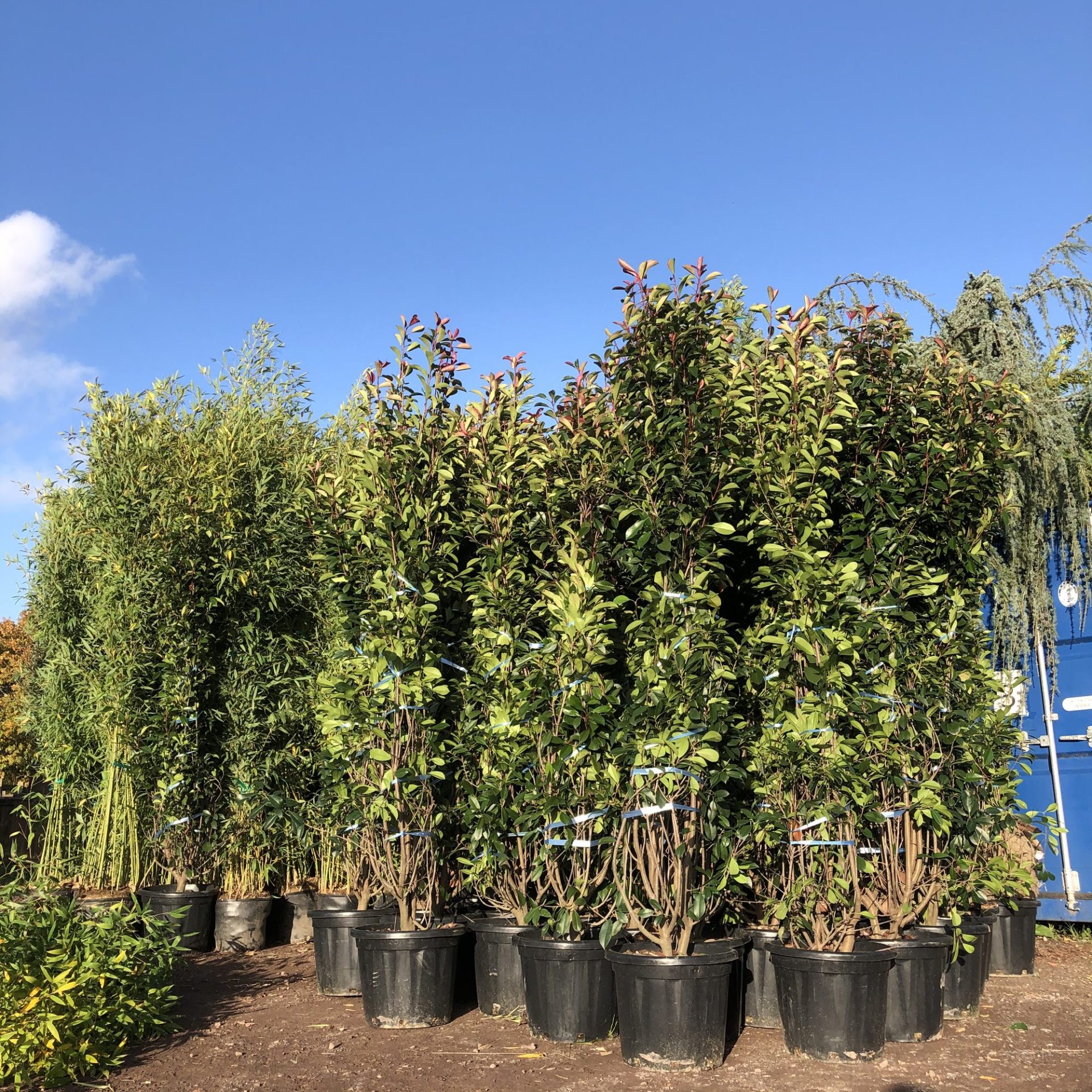
Prunus laurocerasus (Cherry Laurel) – fast-growing evergreen with dense foliage for year-round screening
-
Taxus baccata (English Yew) – traditional, slow-growing and long-lived, ideal for formal settings
-
Prunus lusitanica (Portuguese Laurel) – dark green leaves and compact growth, great for neat boundaries
-
Thuja plicata ‘Martin’ – vibrant, lush green foliage with a formal upright habit
-
Thuja occidentalis ‘Smaragd’ – columnar form with bright green foliage, ideal for clipped hedges
Key Features of Root Ball Hedging
Natural Garden Boundary: Root-balled hedging creates a natural and organic boundary for your garden or property, seamlessly blending with the landscape.
Robust Root System: These hedges come with a well-established root ball, providing a strong foundation for healthy growth and ensuring quick establishment.
Ideal for Larger Spaces: Root balled hedging is particularly well-suited for larger outdoor areas where a substantial and durable hedge is needed.
Seasonal Interest: Many root balled hedge species offer seasonal interest with blossoms in spring, lush foliage in summer, vibrant colours in autumn, and unique branch structures in winter.
Habitat for Wildlife: Root balled hedges can create a habitat for wildlife, attracting birds and beneficial insects with their flowers, fruits, and sheltered spaces.
Low Maintenance: Once established, these hedges require minimal maintenance, primarily seasonal pruning to maintain their shape and appearance.
Diverse Plant Selection: A wide range of plant species is available for root balled hedging, including various evergreen and deciduous options. This diversity allows you to choose plants that align with your garden's style and climate.
Expert Advice and Care: Our nursery offers expert advice on selecting the right root balled hedge species and provides guidance on proper planting and care to ensure their long-term health and vitality.
Natural Greenery: Root balled hedges contribute to the natural beauty of your garden and provide a more relaxed and informal look compared to some other hedge types.
Support for Biodiversity: By incorporating root balled hedges into your landscaping, you contribute to sustainable gardening practices by enhancing biodiversity, providing shelter for wildlife, and improving the overall ecosystem of your garden or property.
Questions
What is root-ball hedging?
Root-ball hedging is grown in the field and lifted with its roots and soil wrapped in hessian. It's a good-value way to plant larger hedging plants.
When is the root-ball season?
Root-ball hedging is lifted while the plants are dormant, roughly from November to March. Outside that season, container-grown hedging can be planted instead.
Should I remove the hessian before planting?
Natural hessian can be left on, as it rots down in the soil. Loosen it around the top of the root ball and remove any string, wire or synthetic wrapping.
How soon should root-ball plants be planted?
Ideally within a few days. Keep the root balls moist and out of wind and frost until planting, or heel them into the ground if there's a delay.
Which root-ball hedging gives the quickest screen?
Cherry Laurel and Thuja plicata 'Martin' are among the fastest. Thuja 'Smaragd' is narrow and neat, and yew is slower but gives the finest finish.
How do I water root-ball hedging after planting?
Water thoroughly at planting, then regularly through spring and the first summer. Root balls can dry out faster than the soil around them.
Is root-ball hedging better value than container-grown?
Usually, especially for larger plants, as there's no pot or compost. Container-grown hedging gives you a year-round planting window.
Enquire about these plants
Tell us the variety, quantity and delivery postcode, and we'll come back with prices and availability.